Japanese Movie Poster Restoration — Japan Poster Shop × Fourth Cone
JAPAN POSTER SHOP × FOURTH CONE RESTORATION
Preserving the original. Documenting the process.
From a first-release Godzilla poster of 1954 to giant Japanese Star Wars billboards, the projects featured here explore some of the most culturally important and physically challenging objects in the history of Japanese film advertising. Japan Poster Shop sourced and selected the original material; Fourth Cone Restoration undertook the specialist treatments and documented the work in film.
Across YouTube, Instagram, Facebook and TikTok, the collaborative films and their edits have accumulated more than 100 million views, according to Japan Poster Shop’s cross-platform reporting. The figure represents cumulative video plays across platforms rather than individual viewers. More importantly, these films have introduced collectors worldwide to the material history behind the posters.
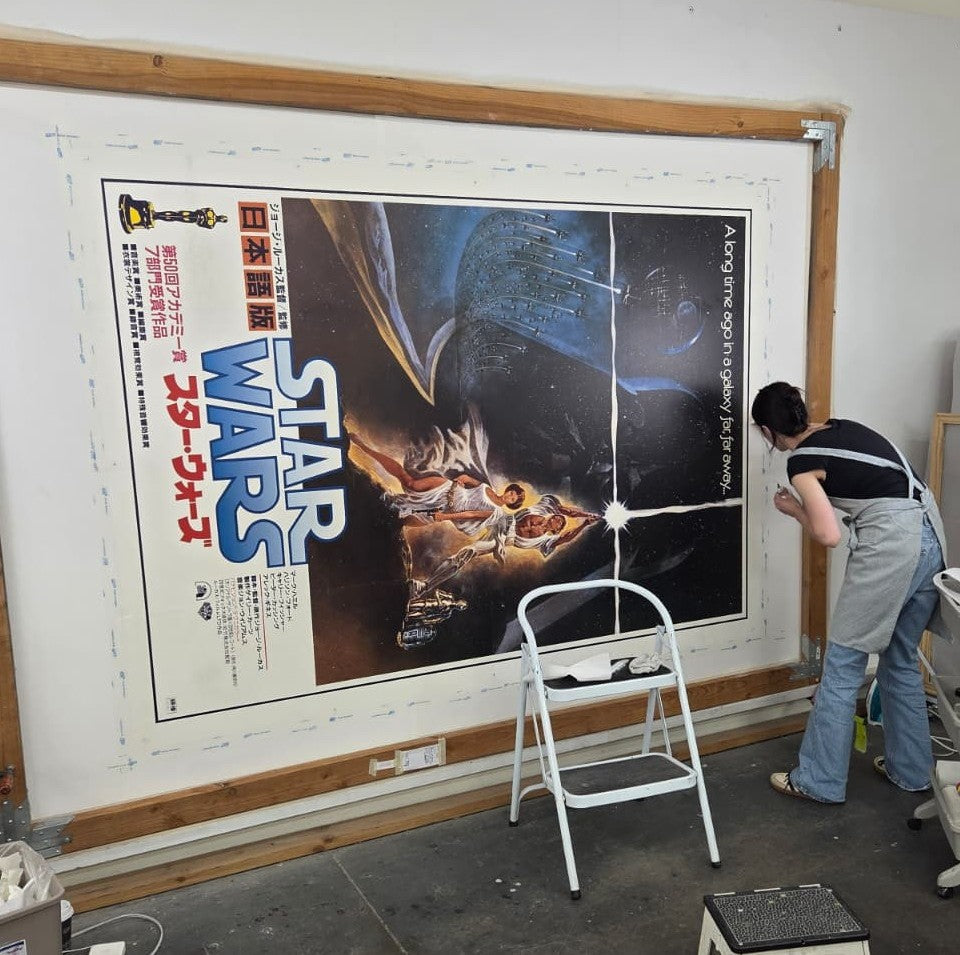
Conservation at monumental scale: the original 1982 Japanese Star Wars two-sheet station-front billboard at Fourth Cone Restoration.
Explore the films: Godzilla · Star Wars giant billboard · Star Wars Seito · Akira Part 6 · Princess Mononoke · Nausicaä · Star Wars × Coca-Cola · Female Prisoner Scorpion
Why these eight works were chosen
The selection is deliberately varied. The posters range from a compact Japanese B3 promotional sheet to large two-sheet cinema billboards and a station-front display with more than twice the area of JIS B0. Some are rare first-release theatrical posters; others document special campaigns, promotional tie-ins or publishing history. They were chosen because the objects themselves warrant study—not simply because their associated films are famous.
The conservation challenges differ accordingly: supporting weak or folded paper, treating tears and losses, aligning multiple sheets, addressing local colour damage and preparing large originals for safe handling and display. Not every poster requires the same intervention, and a restored original should always be described honestly as restored. The films offer a rare behind-the-scenes record of that work.
For an illustrated comparison of the different formats, see our Japanese Movie Poster Size Guide.
The restoration films
PROJECT 01 / 08 · FOURTH CONE × JAPAN POSTER SHOP
Godzilla (1954) — conserving an exceptionally rare first-release poster
B2 / regional Style B · 1954 · Christie’s New York, March 2026
Watch the full documentary on YouTube — produced by Fourth Cone Restoration.
Featured long-form documentary, with original historical commentary from Japan Poster Shop.

Original Japanese example from the Japan Poster Shop collection and archive. View catalogue record.
The original Japanese Godzilla poster is more than a piece of film promotion: it is a survivor from the first appearance of a character who became central to world cinema. The example featured in this film is the scarce chihōban (regional) Style B, printed for the 1954 Japanese first release.
In the long-form restoration film, the work is accompanied by narration from Japan Poster Shop’s owner about the historical setting, significance and rarity of the object. Its treatment at Fourth Cone illustrates the care involved in preparing fragile post-war cinema paper for long-term preservation.
Following conservation, the original poster was consigned by Japan Poster Shop to Christie’s New York during Asian Art Week in March 2026, where it achieved a published price realised of US$25,400 (including buyer’s premium). That is the result for this specific example, not a valuation of other Godzilla posters.
Explore further: Christie’s case study · View the original sold poster · Godzilla & kaiju collection.
PROJECT 02 / 08 · FOURTH CONE × JAPAN POSTER SHOP
Star Wars (1982) — the giant station-front billboard
Two-sheet station-front billboard · c. 157.5 × 215.9 cm · 1982

Original Japanese example from the Japan Poster Shop collection and archive. View catalogue record.
Watch the restoration short on YouTube — produced by Fourth Cone Restoration.
This extraordinary Japanese Star Wars billboard was produced for the 1982 Japanese-dubbed theatrical re-release. The composition uses Tom Jung’s celebrated artwork on a scale far beyond a cinema one-sheet: approximately nine B2 posters by area, or 2.27 times the area of JIS B0. It was printed in two large sections, not nine individual B2 sheets.
The unused, never-pasted example survived folded for decades. Conservation required delicate flattening, alignment and support across the two original sheets. Its enormous surface area makes the film an especially revealing record of the technical and practical challenges of preserving public-display paper.
Read the full JPS conservation article for its campaign, original construction, provenance and treatment history.
Explore further: Read the full restoration story · View the original poster archive · Japanese Poster Size Guide.
PROJECT 03 / 08 · FOURTH CONE × JAPAN POSTER SHOP
Star Wars (1978) — Seito’s Japanese station-display artwork
B0-class / eki-bari · c. 99 × 157 cm · First Japanese release campaign, 1978
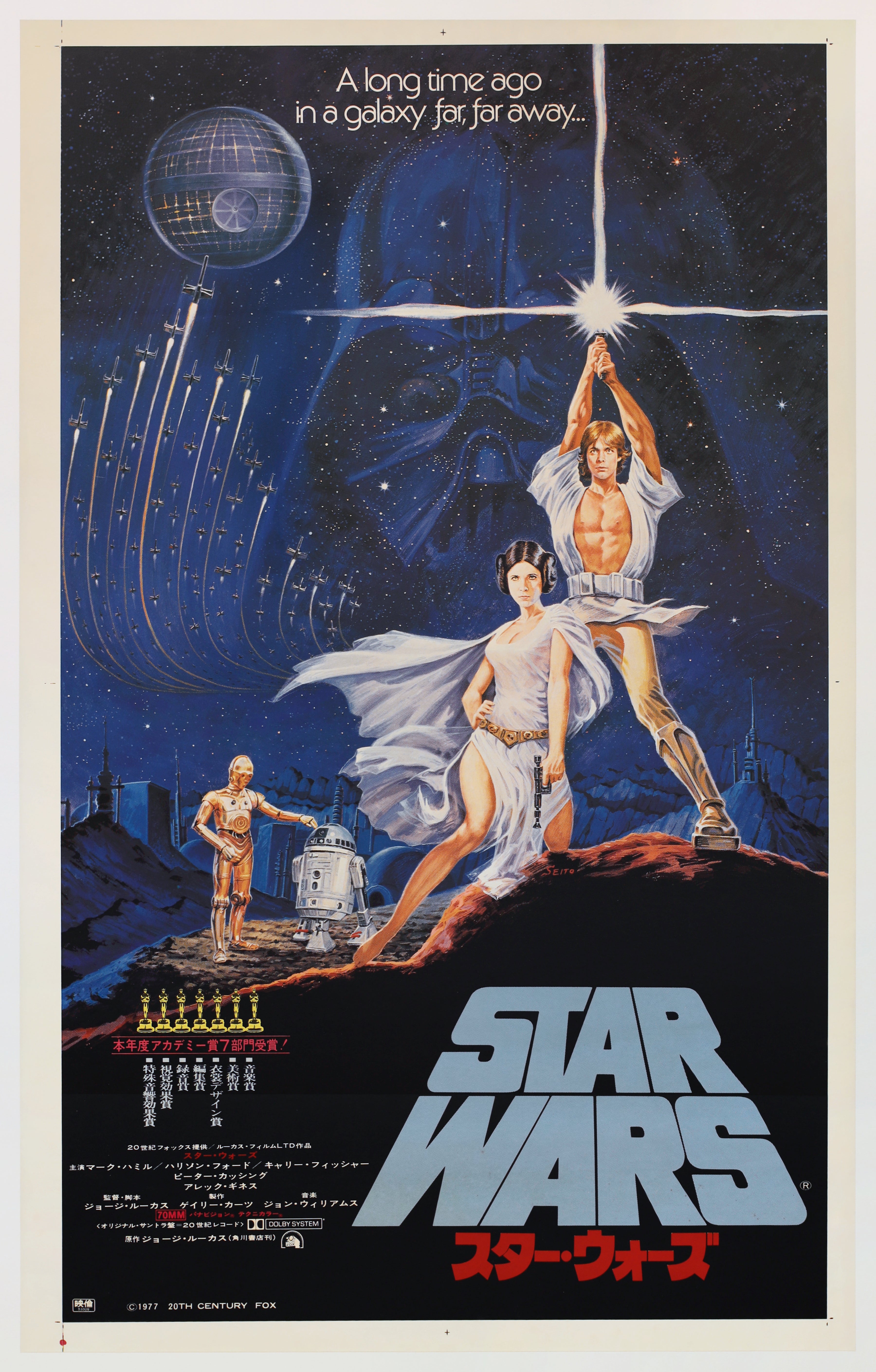
Original Japanese example from the Japan Poster Shop collection and archive. View catalogue record.
Watch the restoration short on YouTube — produced by Fourth Cone Restoration.
Created for the first Japanese theatrical campaign of Star Wars, this monumental station-display poster features Seito’s distinctive painted artwork. It is not simply the familiar international design in a different language; it is an important example of Japanese illustration created for the domestic film market.
The poster’s unusual proportions—approximately 99 × 157 cm—also show why the trade description “B0” does not always mean the exact standard JIS dimensions. Its conservation forms a counterpart to the much larger two-sheet 1982 Star Wars billboard.
Explore further: Original Seito billboard record · Explore original Star Wars posters.
PROJECT 04 / 08 · FOURTH CONE × JAPAN POSTER SHOP
Akira Part 6 (1993) — colour restoration of an exceptional B1 prize poster
B1 · 1993 · Kodansha / Young Magazine · Non-retail prize poster
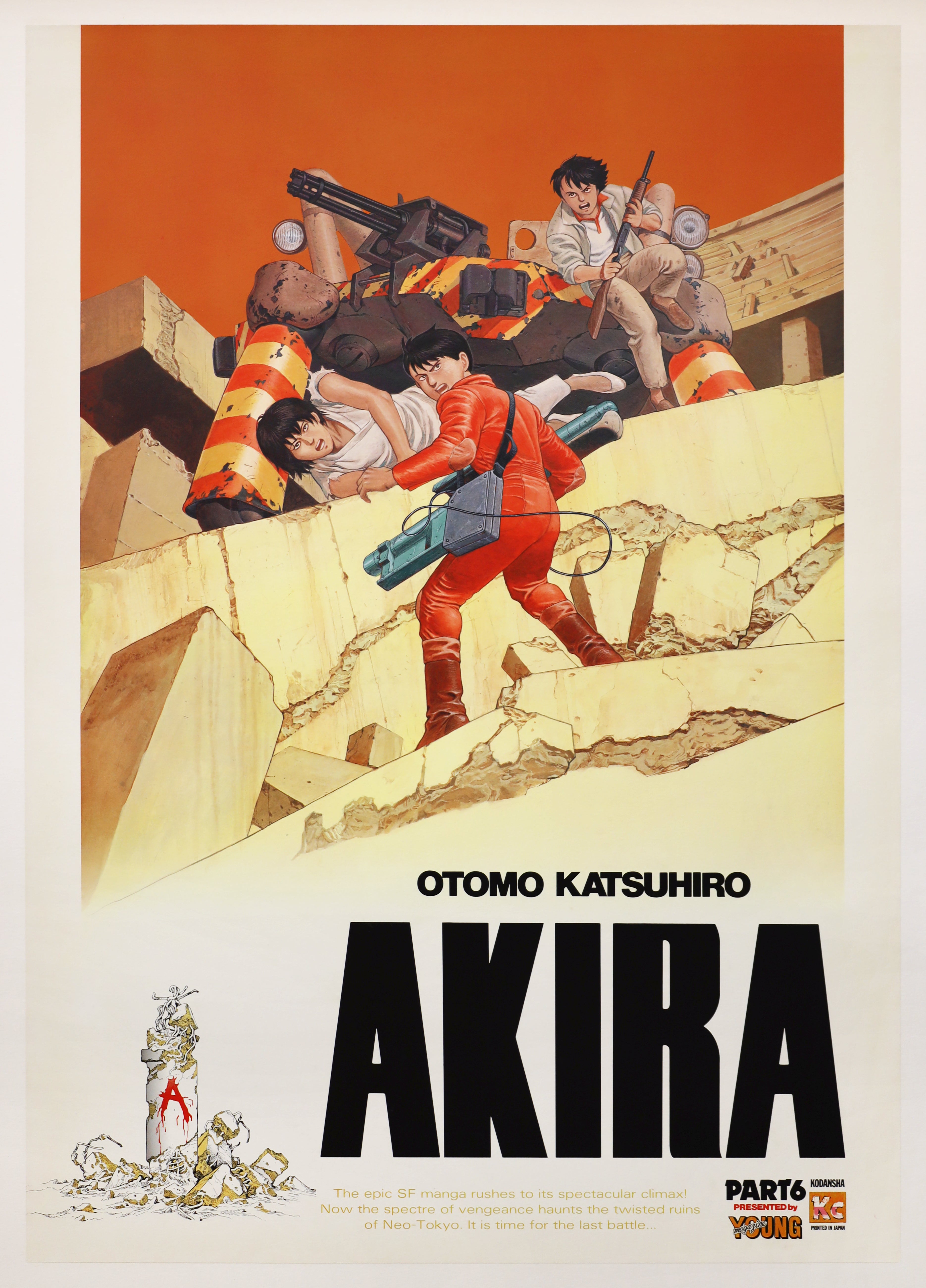
Original Japanese example from the Japan Poster Shop collection and archive. View catalogue record.
Watch the restoration short on YouTube — produced by Fourth Cone Restoration.
This original large-format B1 poster was issued as a Young Magazine promotional prize in connection with the sixth and final volume of Katsuhiro Otomo’s Akira manga. It is not an original 1988 film-release poster: its different date and purpose are part of what makes it historically interesting.
Long-term display had softened elements of its colour. Fourth Cone’s documented treatment addressed the colour balance while stabilising and linen-backing the original sheet. The film provides a particularly useful introduction to the difference between structural conservation and carefully executed visual restoration.
Explore further: Original Akira Part 6 poster record · Browse original Akira posters.
PROJECT 05 / 08 · FOURTH CONE × JAPAN POSTER SHOP
Princess Mononoke (1997) — repairing damage to a rare B1 original
B1 · 1997 · Original Japanese theatrical campaign

Original Japanese example from the Japan Poster Shop collection and archive. View catalogue record.
Watch the restoration short on YouTube — produced by Fourth Cone Restoration.
Hayao Miyazaki’s Princess Mononoke was accompanied by some of the most memorable imagery in Japanese animation advertising. The original B1 offers that artwork at roughly twice the surface area of a B2, but its scale also makes safe storage and handling more challenging.
This example presented tears and losses, including a substantial tear that needed careful attention. The restoration film follows the repair and supporting treatment, illustrating how fragile areas can be stabilised and visually reintegrated without mistaking a restored example for an untouched sheet.
Explore further: Original Princess Mononoke B1 record · Browse Studio Ghibli originals.
PROJECT 06 / 08 · FOURTH CONE × JAPAN POSTER SHOP
Nausicaä of the Valley of the Wind (1984) — preserving a large-format Miyazaki poster
B1 · 1984 · Japanese first-release theatrical artwork
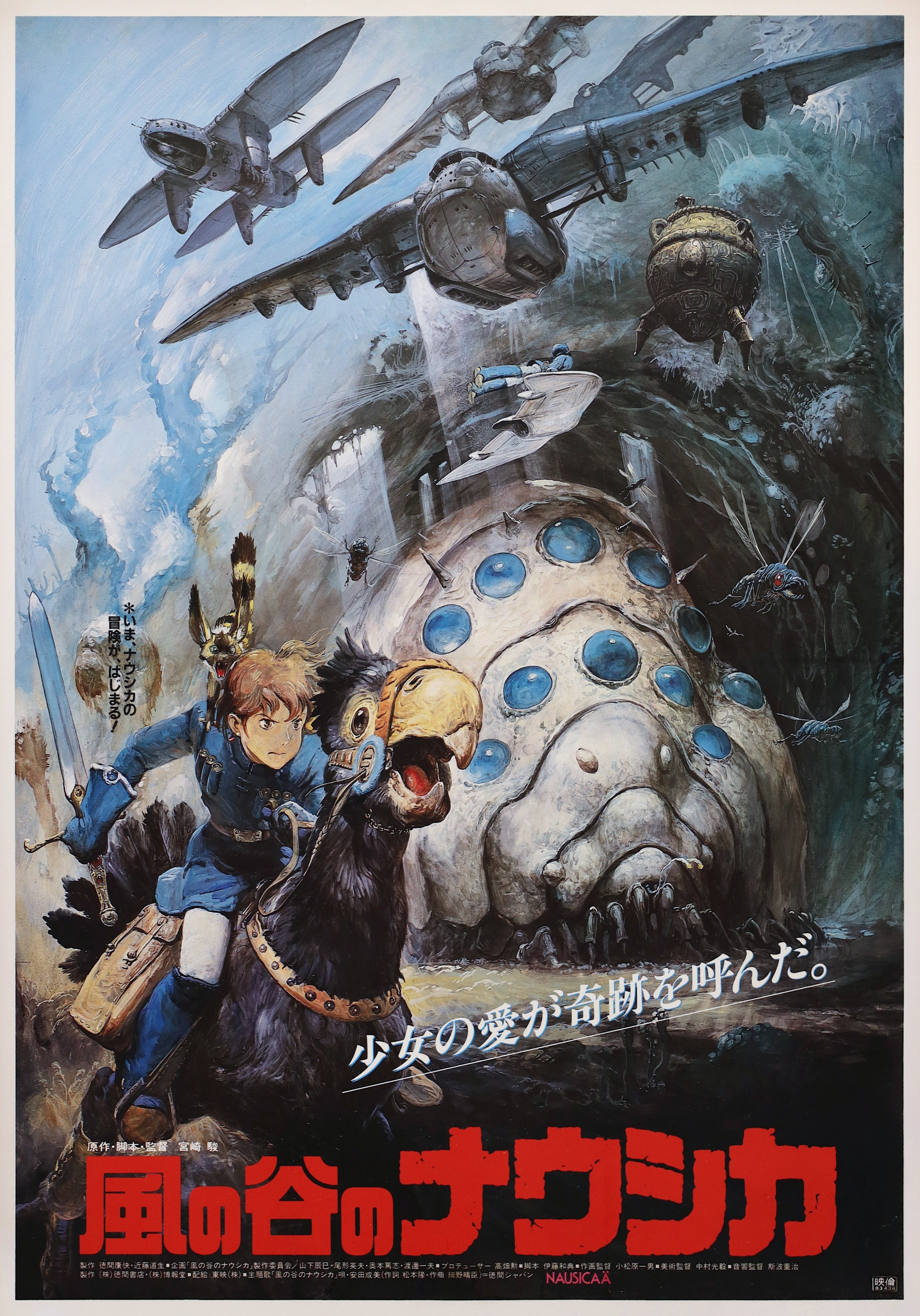
Original Japanese example from the Japan Poster Shop collection and archive. View catalogue record.
Watch the restoration short on YouTube — produced by Fourth Cone Restoration.
Nausicaä of the Valley of the Wind is a defining Hayao Miyazaki film from 1984, preceding the formal founding of Studio Ghibli. The original Japanese B1 design is an imposing example of the film’s first-release advertising and a significant object in Miyazaki poster collecting.
The restoration project documents the professional treatment and linen-backing of an original sheet with age-related wear. Its purpose was to support the surviving paper while retaining the visual character of the period printing.
Explore further: Original Nausicaä B1 record · Explore Miyazaki & Ghibli posters.
PROJECT 07 / 08 · FOURTH CONE × JAPAN POSTER SHOP
Star Wars × Coca-Cola (1978) — restoring a rare B3 promotional poster
B3 · 1978 · Japanese Coca-Cola promotional campaign
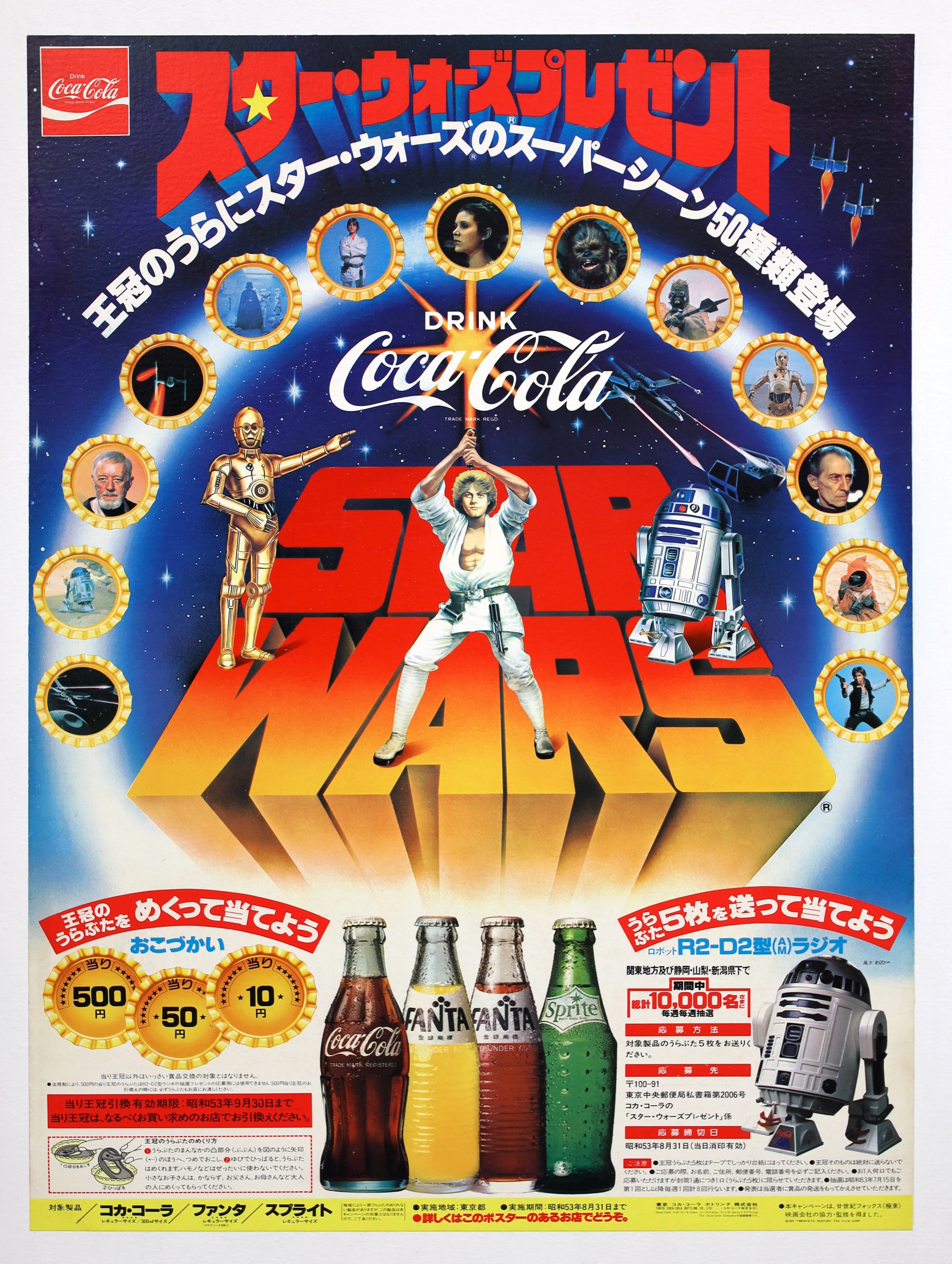
Original Japanese example from the Japan Poster Shop collection and archive. View catalogue record.
Watch the restoration short on YouTube — produced by Fourth Cone Restoration.
Not every historically important poster was made to hang inside a cinema. This compact Japanese B3 poster was issued for a 1978 Star Wars and Coca-Cola promotional campaign, reflecting the film’s wider commercial and popular-cultural impact in Japan.
The film—featuring the memorable “Luke blow-dryer” novelty-promotion story—shows a very different kind of advertising material from the massive station-front billboards. Together they demonstrate the breadth of Japanese paper objects worth researching and preserving, from compact promotions to monumental public displays.
Explore further: Original Coca-Cola B3 poster record · Browse Japanese B3 posters · Explore Star Wars originals.
PROJECT 08 / 08 · FOURTH CONE × JAPAN POSTER SHOP
Female Prisoner Scorpion: #701’s Grudge Song (1973) — conserving a two-sheet billboard
Large two-sheet billboard · approximately 160 × 100 cm · 1973

Original Japanese example from the Japan Poster Shop collection and archive. View catalogue record.
Watch the restoration short on YouTube — produced by Fourth Cone Restoration.
This dramatic original Japanese billboard for Female Prisoner Scorpion: #701’s Grudge Song represents a different chapter of film history: the graphic advertising of 1970s Toei cinema and the enduring visual identity of Meiko Kaji.
Its two-sheet construction and large scale present challenges of alignment, paper stability and display. Professionally restored and linen-backed, this example demonstrates how conservation expertise can be applied to rare Japanese cult-film material as carefully as to internationally recognised Hollywood and anime titles.
Explore further: Original restored billboard record · Explore Meiko Kaji posters · Browse large-format billboards.
Originality, restoration and provenance
Every featured work was an original period poster or advertising object, not a reproduction created for the video. Linen backing, local retouching and paper repair are separate from the question of whether a poster is authentic. Where an example has been treated, its condition and conservation history should remain part of its catalogue record.
Fourth Cone’s film documentation allows viewers to see techniques that are rarely visible in a final framed presentation. It also gives collectors a clearer understanding of why preservation decisions depend on the individual object—its age, paper, printing, physical damage and intended long-term use. Learn about the independent studio’s approach on the Fourth Cone Restoration website.
The originals may be sold. The history remains.
Many of the exact posters featured in these films have since sold or entered private collections. Their product pages remain available as historical catalogue records, where possible, so that the original issue, format, condition and conservation can still be studied. A sold example is not being represented here as currently available stock.
Explore original vintage Japanese posters currently represented in our gallery and online catalogue:
Continue exploring the JPS archive
Godzilla (1954) at Christie’s — March 2026 case study — the original regional Style B’s subsequent auction history.
Japan Poster Shop’s Christie’s 2026 auction history — documented results and exhibition photographs.
The giant 1982 Star Wars billboard — full illustrated conservation article — research, dimensions and provenance.
Japanese Movie Poster Size Guide — B2, B1, STB, B0 and unusually large billboard formats.
Private gallery viewings in Tokyo
Japan Poster Shop welcomes collectors to our private gallery in Shibuya by confirmed appointment. The majority of the collection is held securely nearby rather than permanently displayed; visits are curated in advance around particular films, artworks and catalogue references. You are welcome to enquire about comparable originals and new acquisitions even where the filmed example has sold.
Request a private gallery appointment · Email Japan Poster Shop
Frequently asked questions
Are the original posters in the videos available to purchase?
Many of the filmed originals have sold. The linked product pages serve as catalogue records; please check live availability and browse related collections for other original examples.
Does restoration mean the poster is a reproduction?
No. A period-original poster remains an original object even when it has undergone documented conservation or restoration. The nature and extent of treatment should be disclosed separately from authenticity.
Is the Akira Part 6 poster a theatrical poster from 1988?
No. It is an original 1993 Kodansha / Young Magazine prize poster associated with the sixth volume of the Akira manga, printed in B1 size.
How large is the giant 1982 Star Wars billboard?
Approximately 157.5 × 215.9 cm (62 × 85 in) as assembled: two printed sections, approximately 2.27 times the area of JIS B0 and about nine B2 sheets by area.
Who carries out the conservation treatments?
Fourth Cone Restoration is an independent specialist conservation and restoration studio. Japan Poster Shop sources and documents the original Japanese cinema material featured in these collaborations.
Editorial archive. All posters illustrated are authentic historical examples from Japan Poster Shop’s collection or archive; some have sold. Treatments, condition and ownership vary by object. Videos were created by Fourth Cone Restoration and are embedded from its YouTube releases; the studios are independent collaborators. Film titles, artwork and related trademarks belong to their respective rights holders. Published viewing figures are cumulative as reported by Japan Poster Shop and are not audited unique-viewer counts.